Banmaas of Mattan, Anantnag — Kashmir’s Ancient Spiritual Heritage
Introduction
In the sacred valley of Kashmir, where snow-covered mountains meet ancient springs and timeless temples, many spiritual traditions have survived for thousands of years. Among these traditions is Banmaas, an important religious and cultural observance connected deeply with the Kashmiri Hindu community, especially the Kashmiri Pandits.
Banmaas is associated with Mattan (Martand) in the Anantnag district of Kashmir — one of the oldest and holiest Hindu pilgrimage places in the region. This sacred place carries the memory of ancient Vedic civilization, Surya worship, Kashmir Shaivism, and the spiritual lifestyle once flourishing throughout Kashmir.
To understand Banmaas properly, one must understand not only the festival itself but also the spiritual history of Kashmir, the significance of Mattan, the Martand Sun Temple, and the deep emotional connection Kashmiri Pandits have with this land.
What is Banmaas?
The word Banmaas is traditionally understood from two Kashmiri/Sanskrit-rooted expressions:
- Ban — forest, wilderness, or natural sacred surroundings
- Maas — month
Historically, Banmaas refers to a sacred observance connected with purification, pilgrimage, prayer, ancestral remembrance, and community gathering.
For Kashmiri Pandits, Banmaas is not merely a festival. It is:
- A spiritual gathering
- A remembrance of ancestors
- A reaffirmation of faith
- A cultural identity
- A connection to sacred land and heritage
The observance is centered around Mattan, a place considered spiritually charged since ancient times.
Mattan — The Ancient Martand
The Meaning of “Martand”
The ancient name of Mattan is Martand.
In Sanskrit:
- Marta = dead or hidden
- Anda = cosmic egg
But in Vedic tradition, Martand also refers to the Sun God Surya, one of the Adityas mentioned in the Vedas.
Thus, Martand became known as:
“The Land of the Sun”
Historical Importance of Mattan
Mattan is one of the oldest continuously revered Hindu pilgrimage places in Kashmir.
It became famous because of:
- Sacred springs
- Vedic rituals
- Ancient temples
- Brahmin learning traditions
- Connection with Surya worship
- Kashmir Shaivism
For centuries, sages, scholars, pilgrims, and devotees visited Mattan for spiritual purification and worship.
The Sacred Springs of Mattan
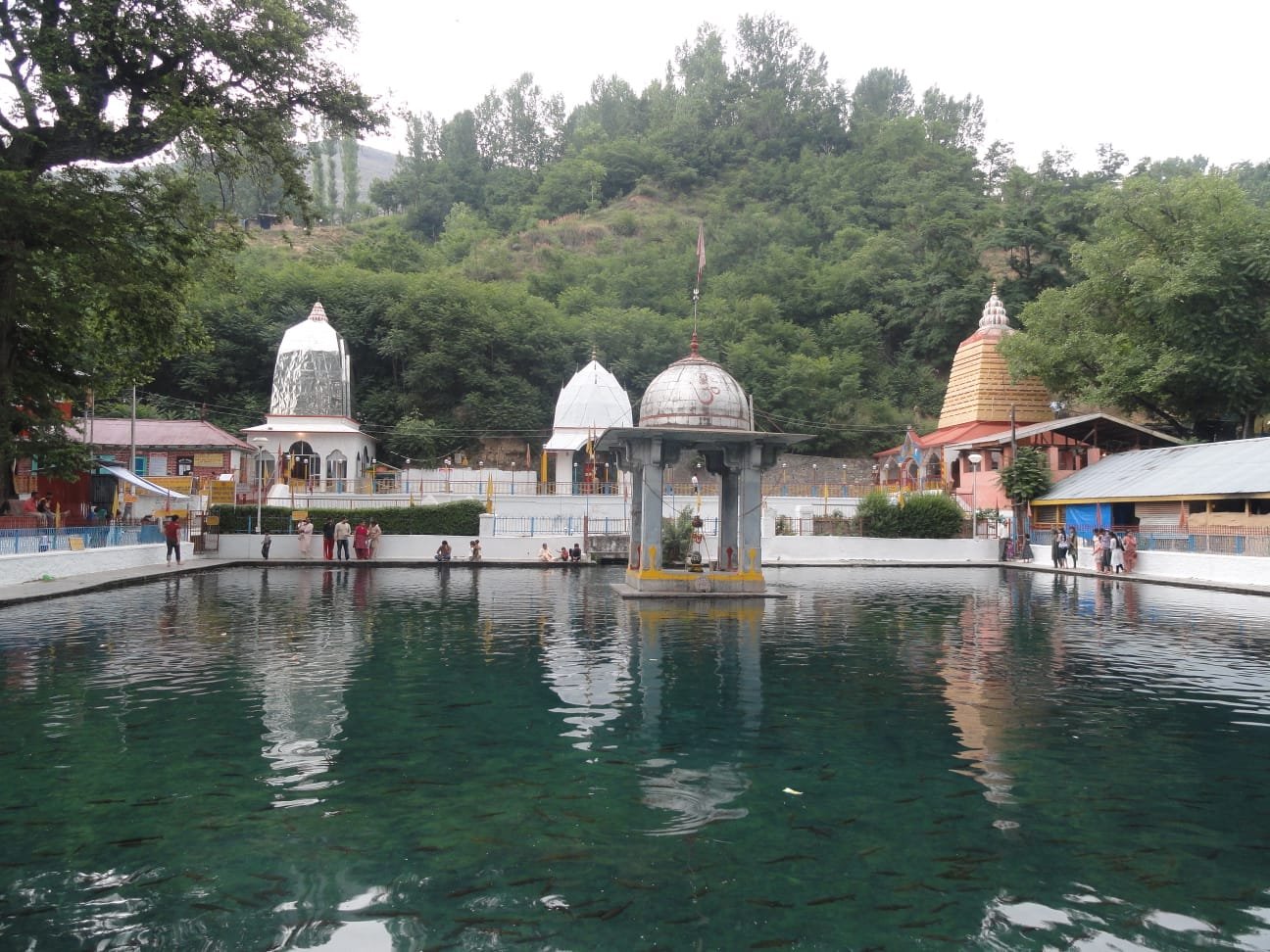
One of the most unique features of Mattan is its sacred spring complex.
The crystal-clear springs are considered holy and spiritually purifying.
In Hindu tradition, sacred water represents:
- Purity
- Divine consciousness
- Life energy
- Cleansing of karma
- Spiritual rebirth
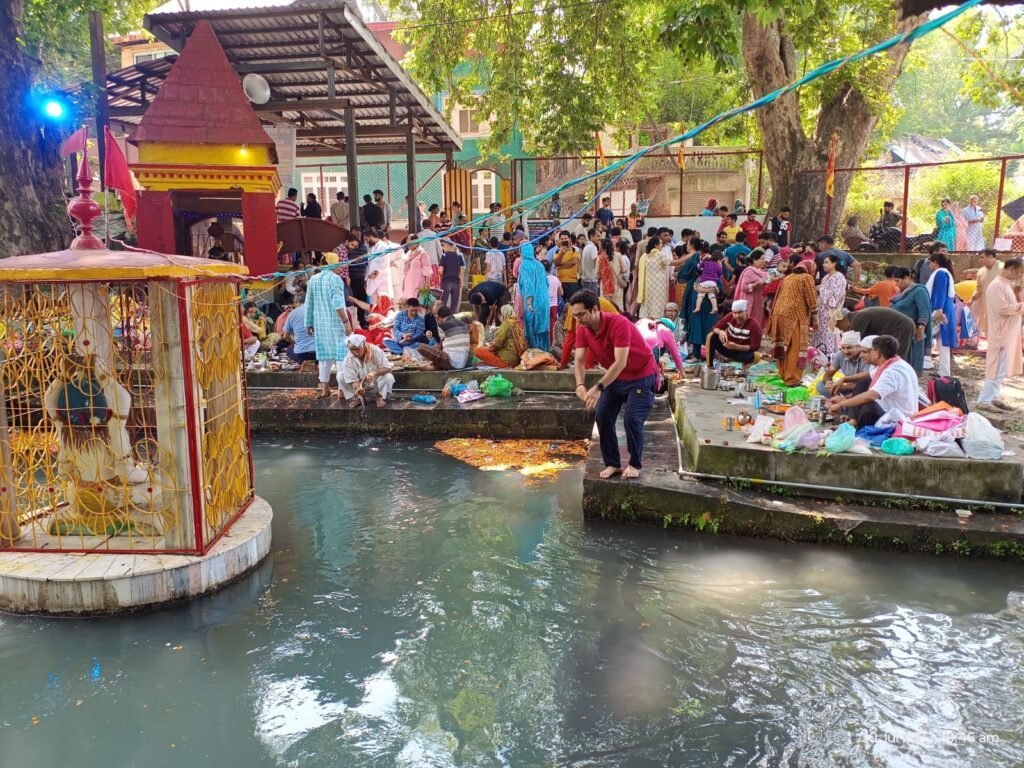
Pilgrims traditionally:
- Bathe in the waters
- Offer prayers
- Perform rituals for ancestors
- Meditate near the springs
The springs are also famous for sacred fish that are traditionally protected and not harmed.
This reflects the Vedic principle:
“All life is sacred.”
The Martand Sun Temple
One of India’s Greatest Ancient Temples
The most famous spiritual structure connected with Banmaas is the Martand Sun Temple.
This temple is among the greatest examples of ancient Hindu architecture in Kashmir.
It was built during the reign of:
King Lalitaditya Muktapida
of the Karkota Dynasty in the 8th century CE.
Architecture of the Temple
The Martand Sun Temple combined:
- Gandhara architectural influence
- Gupta-style design
- Classical Kashmiri stone architecture
- Vedic temple geometry
The temple was built on a plateau overlooking the Kashmir valley.
Its location itself symbolizes:
“Light rising above the world.”
The temple once had:
- A grand sanctum
- Massive stone pillars
- Courtyards
- Carved walls
- Sacred Surya idol
Even in ruins today, it reflects extraordinary craftsmanship.
Spiritual Meaning of Surya Worship
In Vedic tradition, Surya is not merely the physical sun.
Surya represents:
- Divine light
- Consciousness
- Knowledge
- Truth
- Health
- Spiritual awakening
The Rigveda contains many hymns praising Surya as:
“The eye of the universe.”
Sun worship in Kashmir was deeply connected with:
- Yoga
- Meditation
- Time cycles
- Agriculture
- Cosmic order (Rta)
The Martand Temple symbolized the victory of light over darkness.
Kashmir — A Great Center of Hindu Civilization
Today many people forget that Kashmir was once among the greatest centers of Hindu philosophy and learning.
Ancient Kashmir contributed greatly to:
- Sanskrit scholarship
- Shaivism
- Tantra
- Poetry
- Philosophy
- Aesthetics
- Spiritual sciences
Great scholars from Kashmir include:
- Abhinavagupta
- Kalhana
- Kshemaraja
- Anandavardhana
Kashmir Shaivism became one of the highest philosophical systems in Hindu thought.
Connection Between Banmaas and Kashmiri Pandits
For Kashmiri Pandits, Banmaas carries deep emotional and spiritual meaning.
It represents:
- Connection with ancestors
- Preservation of identity
- Return to sacred roots
- Continuation of tradition
Even after displacement and suffering, many Kashmiri Pandits continue visiting Mattan during religious observances.
For them, Banmaas is an act of:
remembrance, resilience, and devotion.
Rituals Performed During Banmaas
Different families and traditions observe Banmaas differently, but common practices include:
1. Sacred Bathing
Pilgrims bathe in holy springs for purification.
2. Tarpan for Ancestors
Offerings of water and prayers are made for departed souls.
3. Temple Worship
Devotees offer flowers, lamps, rice, and prayers.
4. Community Gathering
Families and communities reunite.
5. Spiritual Reflection
People meditate, chant mantras, and remember their roots.
Importance of Ancestor Worship in Hinduism
One major aspect of Banmaas is honoring ancestors.
In Sanatan Dharma, ancestors are respected because:
- Life is received through lineage
- Gratitude is a sacred duty
- Spiritual continuity connects generations
The concept of:
“Pitru Rina”
means:
“Debt towards ancestors.”
Through rituals and remembrance, Hindus express gratitude to previous generations.
Nature and Spirituality in Kashmiri Tradition
Banmaas also reflects the ancient Hindu relationship with nature.
In Vedic civilization:
- Rivers were sacred
- Mountains were divine
- Forests were spiritual centers
- Springs were living energies
Kashmir’s spiritual culture always viewed nature as:
“A manifestation of the Divine.”
This is why many rituals happen near natural water bodies and mountains.
Destruction and Survival of Heritage
Like many ancient temples of India, the Martand Sun Temple faced destruction during medieval invasions.
Much of the structure was damaged, yet its spiritual importance never disappeared.
Even today:
- Pilgrims visit the site
- Devotees offer prayers
- Historians admire its architecture
- Kashmiri Hindus preserve its memory
The ruins stand as symbols of:
- Ancient glory
- Cultural endurance
- Spiritual continuity
Banmaas in Modern Times
Today Banmaas is observed not only in Kashmir but also by displaced Kashmiri Pandit communities living across India.
The festival has become:
- A cultural reunion
- A remembrance of homeland
- A preservation of tradition
- A spiritual connection to Kashmir
Younger generations are also learning about:
- Their heritage
- Temple traditions
- Kashmiri rituals
- Vedic roots
Spiritual Lessons from Banmaas
Banmaas teaches many important lessons:
1. Never Forget Your Roots
Civilizations survive through memory and tradition.
2. Nature is Sacred
Human beings must live in harmony with nature.
3. Light Always Returns
Like the Sun of Martand, truth and light eventually rise again.
4. Spiritual Identity Matters
A community survives through culture, faith, and values.
5. Ancestors Must Be Honored
Respect for previous generations strengthens society.
Conclusion
Banmaas of Mattan is far more than a regional festival.
It is:
- A living memory of ancient Kashmir
- A symbol of Vedic spirituality
- A bridge between past and present
- A sacred connection between people, land, ancestors, and divinity
The springs of Mattan, the ruins of the Martand Sun Temple, and the continuing devotion of Kashmiri Pandits together preserve one of the oldest spiritual traditions of the Indian civilization.
Even today, when devotees stand before the ancient stones of Martand and the sacred waters of Mattan, they feel something timeless: